
 Shopify
 WooCommerce
Let’s be honest: the "Golden Era" of easy dropshipping is over.
Gone are the days when you could throw a generic AliExpress product onto a basic website, run a $5 Facebook ad, and watch the sales roll in. In 2026, the market is saturated, ad costs keep climbing, and customers are more skeptical than ever.
To survive and scale, you need to operate with the efficiency of a large team even if you are a solopreneur. That is exactly what AI now provides: it learns, predicts, and automates, from spotting the next viral product before it saturates to letting customers try on clothes virtually.
We curated the 11 AI tools that actually earn their monthly fee: they automate your operations, sharpen your marketing, and turn a generic dropshipping store into a brand people trust.
Part 1: Operations & Product Sourcing
The foundation of dropshipping is speed. These tools ensure your backend runs on autopilot.
1. Shopify Magic – The Native Assistant
If your store runs on Shopify, you have a powerful AI suite right at your fingertips. Shopify Magic is deeply integrated into the admin panel.
- What it does: It uses Large Language Models (LLMs) specifically tuned for commerce. It can generate blog posts, rewrite product descriptions to be more persuasive, and even suggest email subject lines that have a higher probability of being opened.
- The 2026 Edge: It now includes "Sidekick," a conversational AI assistant that can answer questions like "Why did my sales drop yesterday?" and execute tasks like "Create a discount code for my abandoning customers."
- Best For: Speed. It eliminates "writer's block" instantly.
2. DSers – Supply Chain Automation
DSers is the standard for AliExpress dropshipping, but its AI capabilities are often overlooked.
- What it does: Beyond just placing orders, DSers uses algorithms to analyze supplier reliability. It creates a "Supplier Optimizer" list, finding the exact same product you are selling but from vendors with better ratings and lower costs.
- The 2026 Edge: Its dynamic stock management uses predictive logic to alert you before a supplier runs out of inventory, allowing you to switch vendors automatically without the customer ever knowing.
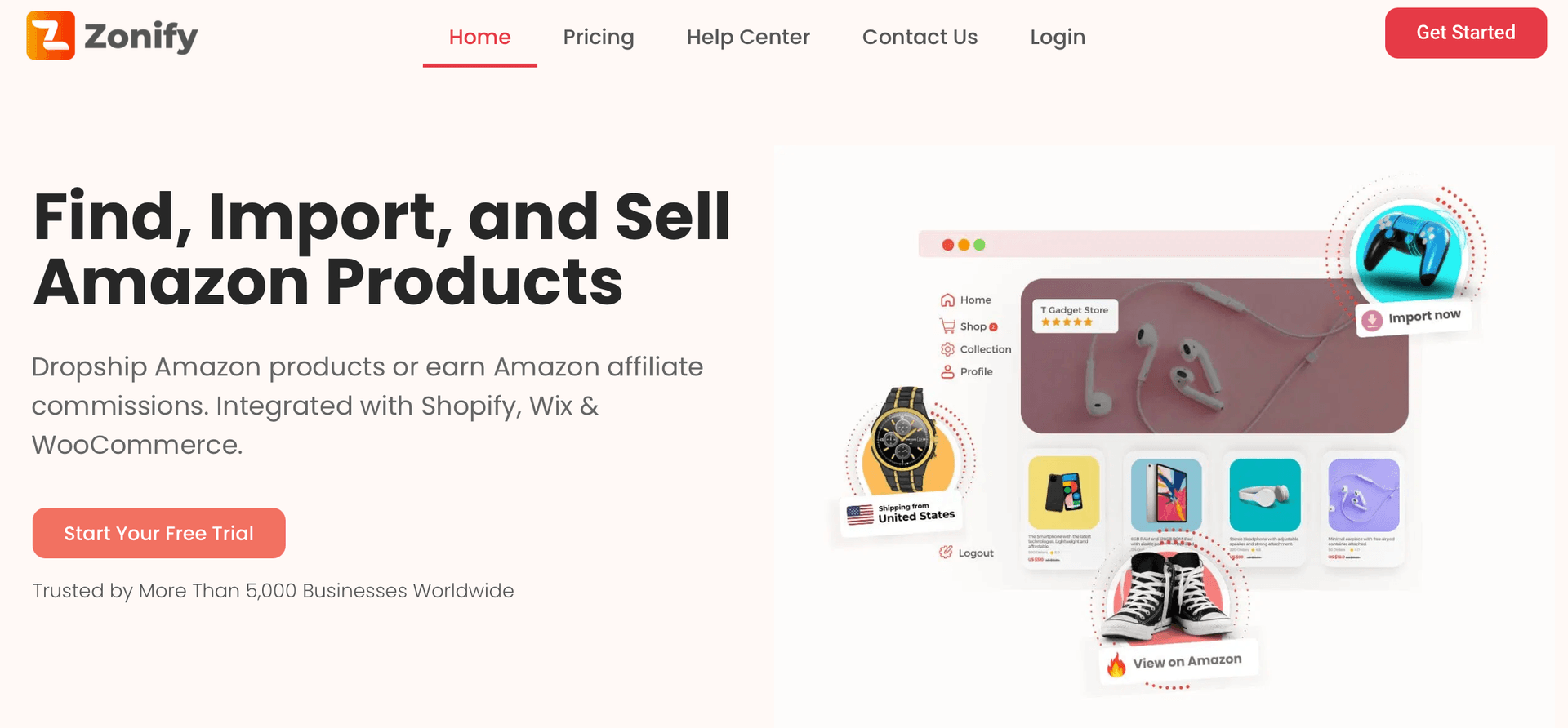
3. Zonify – The Trend Hunter
Finding a winning product is the hardest part of dropshipping. Zonify simplifies this by leveraging Amazon's massive data set.
- What it does: It allows you to import best-selling products from Amazon (and other marketplaces) directly to Shopify.
- The 2026 Edge: Its "AI Trend Watch" analyzes sales velocity on Amazon to identify products that are heating up before they saturate the dropshipping market. It moves you from "guessing" to "knowing."
Part 2: Marketing & Content Creation
You don't need a marketing agency; you just need the right software.
4. Jasper AI – Your Brand Voice
While ChatGPT is great, it often sounds... robotic. Jasper is built specifically for marketers.
- What it does: It learns your specific brand voice (e.g., "luxury," "witty," "urgent") and writes content that matches it perfectly. It offers templates for Facebook Ads, Google listings, and SEO blog posts.
- The 2026 Edge: Jasper can now scan your website to understand your products and automatically generate a month's worth of social media captions that align with your current inventory.
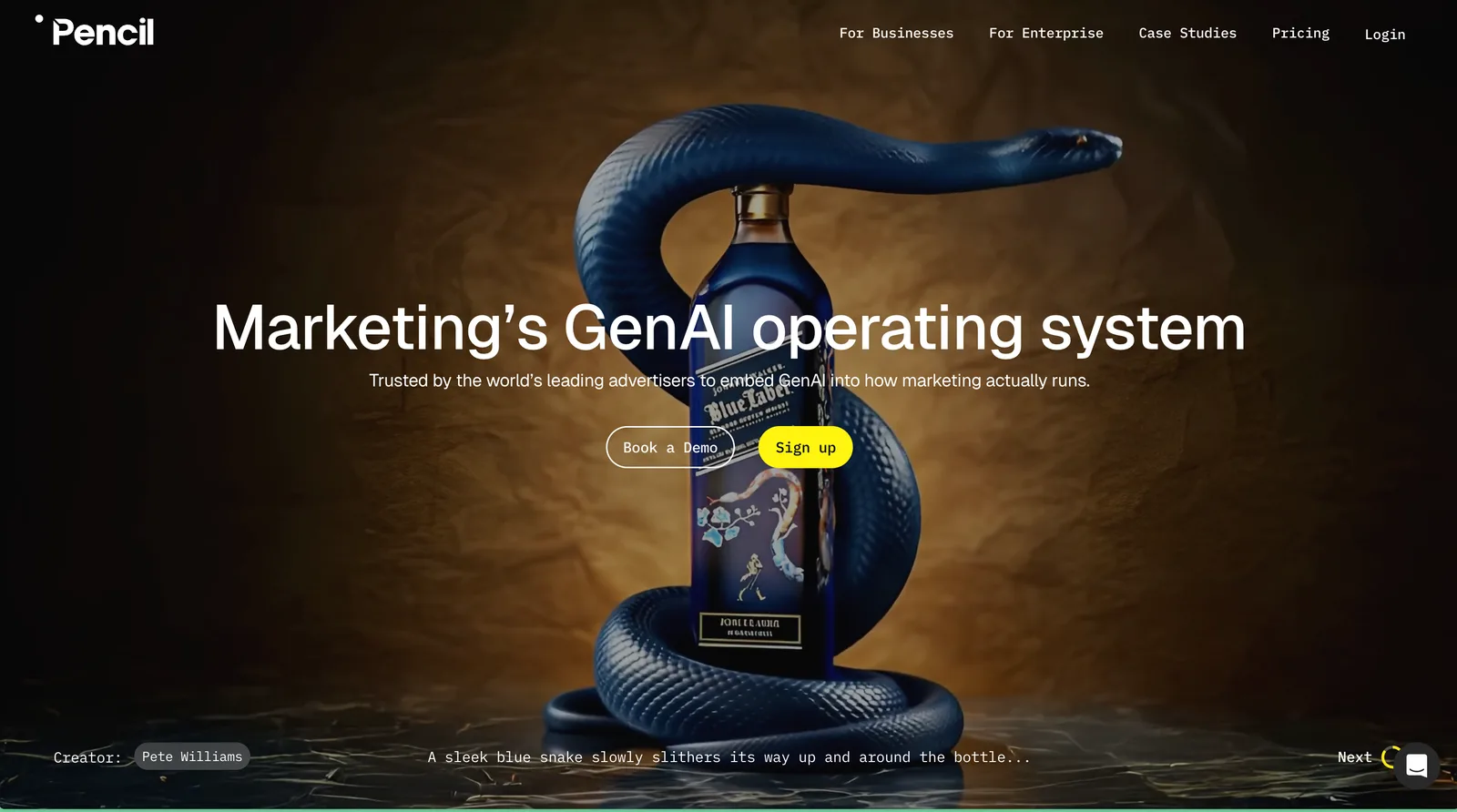
5. Pencil – AI Ad Creative Generation
Creative fatigue is real. Audiences get bored of seeing the same image ad after 3 days. Pencil solves this.
- What it does: You feed it your branding assets (logo, colors, product video), and it generates dozens of video ad variations in minutes.
- The 2026 Edge: It doesn't just make ads; it scores them. Pencil predicts which video will perform best based on millions of dollars of ad spend data, allowing you to launch with your best foot forward.
6. AdScale – The Autonomous Media Buyer
Managing Facebook and Google Ads requires constant tweaking. AdScale puts this on autopilot.
- What it does: It uses AI to analyze your store's data and automatically creates campaigns across Google, Facebook, and Instagram. It reallocates budget in real-time to the channels bringing in the highest ROAS (Return on Ad Spend).
- The 2026 Edge: Its "BI" (Business Intelligence) dashboard acts as a CMO, telling you exactly which customer segments are most profitable so you can double down.
Part 3: Customer Experience & Conversion (The Trust Builders)
This is where dropshippers usually fail. How do you convince a stranger to buy a product they can't touch from a brand they just met?
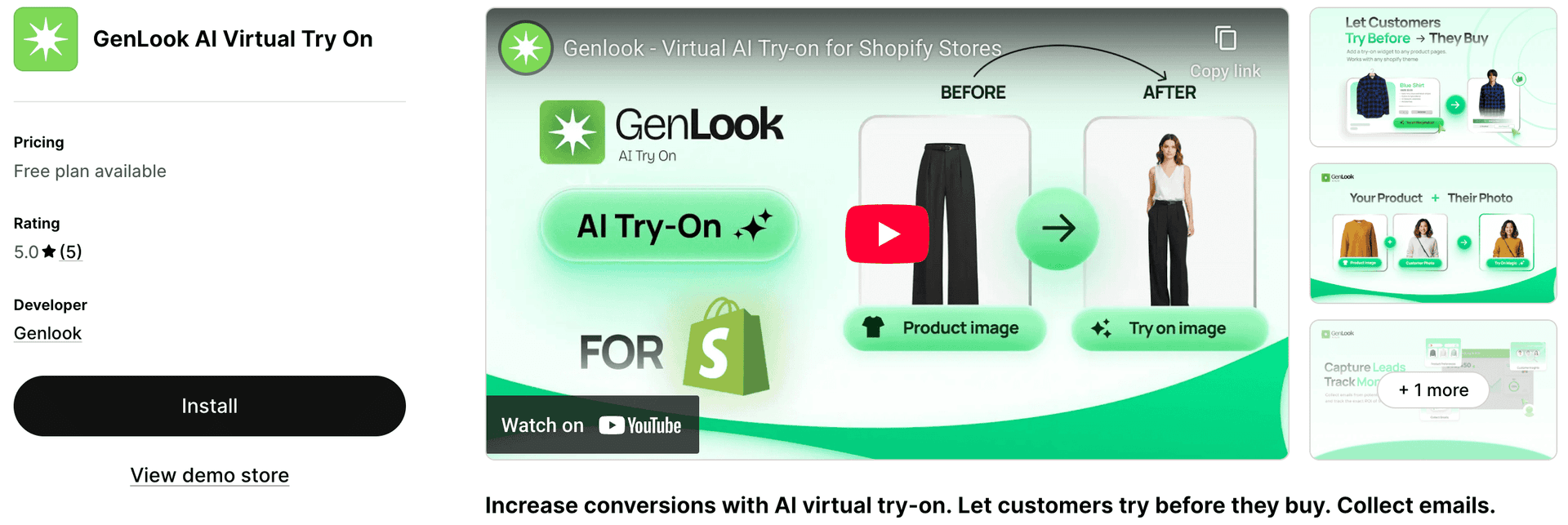
7. Genlook – The "Trust Engine" for Fashion
Fashion is the most lucrative dropshipping niche, but it has a fatal flaw: Trust. Customers worry about fit, and they worry the item will look "cheap" compared to the photo.
Genlook attacks that trust gap directly.
- What it does: It adds a "Try On" widget to your product page. Customers upload a photo of themselves, and the AI realistically drapes the clothing onto them.
- The 2026 Edge:
- Differentiation: 99% of dropshippers use the same supplier photos. By offering Virtual Try-On, you look like a high-end tech-forward brand.
- Reduced Returns: When a customer sees the item on their own body, they are less likely to be disappointed when it arrives.
- Viral Marketing: Customers love sharing their "try-on" photos. It turns your product page into a social media experience.
8. Tidio (Lyro AI) – 24/7 Support
Dropshipping involves shipping times that can worry customers. You need instant answers to prevent chargebacks. Tidio uses an AI agent called Lyro.
- What it does: Unlike old chatbots that used rigid decision trees, Lyro understands context. It can check Shopify order statuses and tell a customer exactly where their package is without you lifting a finger.
- The 2026 Edge: It solves up to 70% of inquiries automatically, allowing you to run a global store without hiring a 24-hour support team.
For fashion-focused stores, pre-purchase hesitation around sizing and fit creates just as much churn as shipping delays. An AI chatbot for Shopify handles these product questions in real time, capturing sales before visitors bounce.
Part 4: Profit Protection
9. Prisync – Dynamic Pricing
If a competitor drops their price by $5, you lose the sale. If you don't know they did it, you lose the market. Prisync watches them for you.
- What it does: It tracks competitor prices and stock levels.
- The 2026 Edge: You can set rules like "Always be 5% cheaper than Amazon, but never go below 20% margin." The AI handles the math and updates your store prices instantly.
10. Ecomdash – Inventory Sync
If you scale, you might sell on eBay or TikTok Shop as well as Shopify. Ecomdash keeps you sane.
- What it does: It syncs inventory across all channels.
- The 2026 Edge: Its AI forecasting predicts how much stock you will need next month based on current sales velocity and seasonality, preventing the dreaded "Out of Stock" label on your best-sellers.
Part 5: Brand Foundation
Before you source a single product, you need a brand name that's memorable, easy to spell, and available as a .com. A weak or generic name caps your store before it launches.
11. AI Name Generator – Your Brand Foundation
AI Name Generator removes the guesswork.
- What it does: It generates 50–100 brandable name ideas from a single keyword and checks .com domain availability in real time, with dedicated generators for clothing, fashion, jewelry, and Shopify stores.
- The 2026 Edge: Instead of generic output, it tailors suggestions to your niche (so a streetwear label and a fine-jewelry brand get appropriately different name styles) and lets you filter by tone (modern, classic, unique) to match your brand voice.
- Best For: Founders at day zero who want a launch-ready name and matching domain in minutes, not weeks.
Conclusion: The Automated Future
In 2026, the difference between a struggling dropshipping store and a scaling brand is automation.
You cannot manually check competitor prices. You cannot manually write 50 product descriptions. And you cannot manually reassure every customer about how a dress will fit.
With tools like DSers for logistics, Jasper for copy, and Genlook for the customer experience, you build a business that runs efficiently and converts like a brand, not a reseller.
Get started with Genlook and give your customers the confidence to buy with AI virtual try-on.
FAQ
Questions, answered.
What is the best AI tool for writing dropshipping product descriptions?↓
Shopify Magic and Jasper AI are the top contenders. Shopify Magic is free and built-in, making it perfect for quick edits. Jasper AI offers more robust marketing frameworks (like AIDA) and better brand voice control for high-converting copy.
How can AI help with dropshipping pricing strategies?↓
Pricing tools like Prisync and features within DSers use AI to monitor competitor pricing 24/7. They can automatically adjust your margins to ensure you are the cheapest option during a sale, or raise prices when demand peaks, maximizing profit without manual work.
Is Virtual Try-On useful for dropshipping stores?↓
Absolutely. The biggest weakness of dropshipping is the "trust gap": customers know they can't see the product before buying. Genlook bridges this by letting them virtually try on the item. This elevates a generic dropshipping store into a branded shopping experience, significantly boosting conversion rates.
Can AI replace customer service agents?↓
Largely, yes. Tools like Tidio (Lyro) can automate up to 70% of customer inquiries. They handle "Where is my order?" and "What is your return policy?" instantly, leaving only complex issues for human intervention.