
 Shopify
 WooCommerce
What shoppers once called "online shopping" has evolved into something far smarter.
Virtual shopping now blends artificial intelligence, augmented reality, and live video commerce into one immersive experience. Shoppers can use AI to see clothes on their own body, preview furniture in their space, or join a livestream before making a purchase. It’s also becoming tightly connected to clienteling, where associates use unified data to deliver personalized service.
For small and midsize retailers, this shift can feel overwhelming, but it’s a practical opportunity, especially when e-commerce and point of sale (POS) work on a single commerce platform like Shopify.
In this guide, we’ll explore the technologies making this possible, how clienteling fits in, and how to build virtual shopping into your business step by step.
What is Virtual Shopping?
Virtual shopping is a digital service where customers can browse and shop for products online as they would in a brick-and-mortar retail store.
Done well, it creates a unified shopping experience that connects online and in-store journeys. When e-commerce and POS data live on the same platform, every interaction feeds the same customer profile and inventory view.
An associate working in-store, at home, or at the head office can instantly connect with online customers via text, chat, or video. Through this real-time connection, shoppers can ask questions, virtually try on products, and get recommendations from a product expert while also browsing the entire online catalog.
These interactions generate rich data insights. Every virtual try-on, augmented reality (AR) view, and live chat helps retailers understand what customers engage with most. These insights feed directly into merchandising, inventory, and marketing decisions.
What is Clienteling in Retail?
Clienteling is the practice of building one-to-one relationships with shoppers using data, personalization, and consistent communication. It’s the modern counterpart to remembering a regular’s favorite order or preferred style, only now powered by integrated data and AI.
In 2025, clienteling has become inseparable from virtual shopping. The same AI and AR tools that let shoppers visualize products also help retailers understand their preferences.
The Difference Between Customer Service and Clienteling:
- Customer Service is reactive. It focuses on resolving issues after they happen (e.g., "Where is my order?").
- Clienteling is proactive. It anticipates needs before the customer asks (e.g., "We just got a new blazer that matches the trousers you bought last month.").
Key Technologies Driving Virtual Shopping in 2026
The tools powering virtual shopping heading into 2026 go far beyond simple chat or video calls. Four core technologies now define how shoppers discover, evaluate, and purchase products:
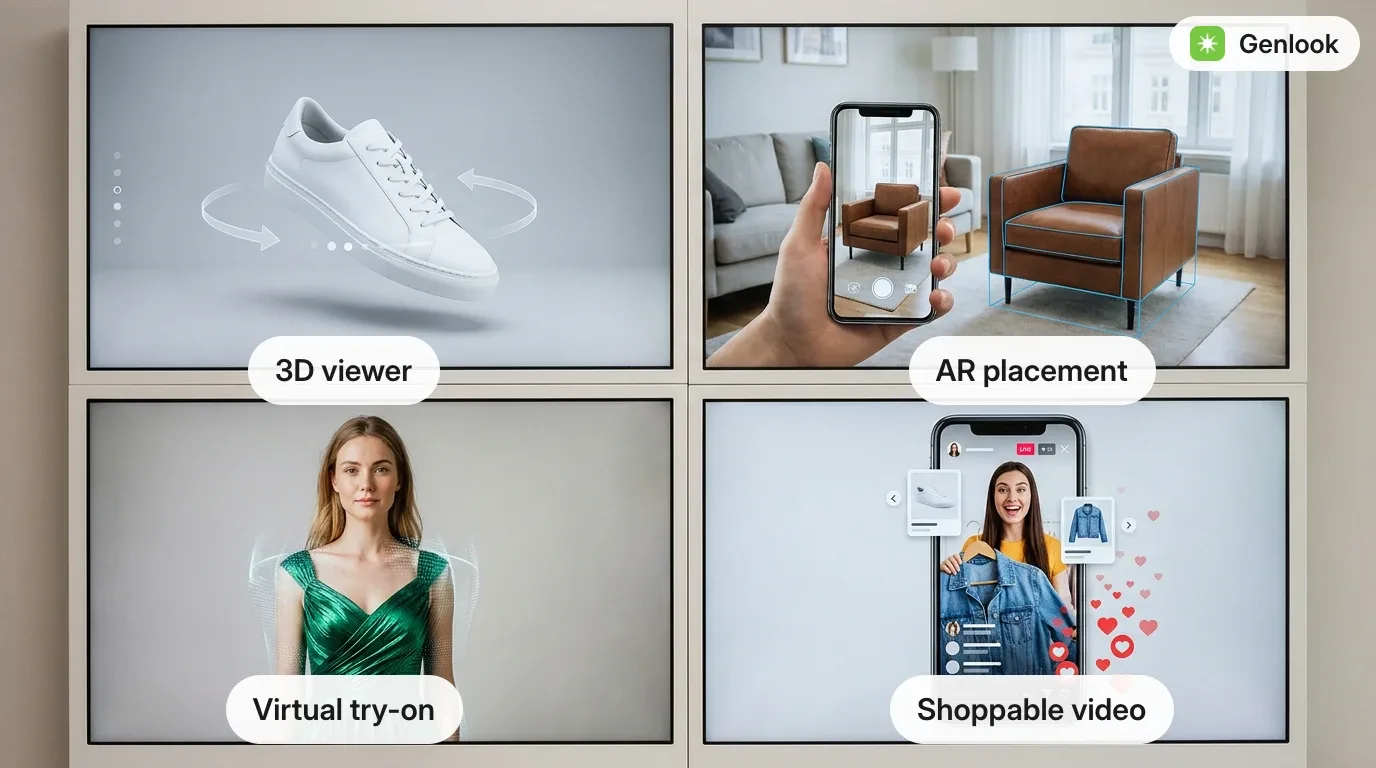
1. AI-Powered Personalization and Virtual Try-On (VTO)
AI is transforming product discovery into a custom experience. Virtual Try-On (VTO) tools let shoppers preview how products look on themselves, while generative AI models simulate how fabrics drape and react to realistic lighting across a range of body types.
This realism directly affects buyer confidence. Shoppers who can see how jeans fit their own proportions or how glasses frame their face are significantly less likely to abandon carts or return products.
How to start:
- Install a VTO app like GenLook: AI Virtual Try On. Unlike complex enterprise solutions, Genlook is designed for Shopify merchants, allowing you to offer generative AI try-on using your existing product photos.
- Run a pilot on a high-return category (like dresses or tops) and monitor metrics such as add-to-cart rate and return reduction.
2. Augmented Reality (AR) for Product Visualization
Augmented reality shopping brings more of the in-store experience into a shopper’s space. It allows customers to "place" products into their environment using a phone camera, removing guesswork about size, scale, or color.
Retailers like IKEA and Wayfair pair AR visualization with generative design. For fashion, AR is excellent for rigid items like shoes, bags, or jewelry, allowing users to see them in 3D space.
3. Virtual Reality (VR) Showrooms
VR takes immersion a step further by creating navigable, three-dimensional stores or showrooms. Unlike AR, which layers products onto the real world, VR offers a fully immersive experience where shoppers can "walk" through virtual aisles.
For smaller businesses, full-scale worlds aren’t required. You can repurpose 3D models to create a single-room virtual showroom, hosting it online to invite customers to explore new collections.
4. Livestream Shopping
Livestream commerce is a real-time, shoppable broadcast where a host presents products to a large audience. Viewers can chat, react, and purchase directly from the stream. It turns a product page into a live event: part demo, part Q&A, part drop.
Livestreams bring discovery, evaluation, and purchase together in one session, restoring the human interaction customers crave in a digital world.
11 Benefits of Virtual Shopping and Clienteling
Virtual shopping has grown from a sales experiment into one of retail’s most strategic growth drivers. Here is why it matters for your store:
- Human Connection as a Competitive Advantage: Small retailers win on relationships. Virtual clienteling lets you maintain that personal touch digitally.
- Higher Order Value (AOV): AI-driven recommendations encourage customers to spend more by showing relevant items in real time.
- True Omnichannel Consistency: Shoppers can discover online, try on virtually, and buy in-store without friction.
- Smarter Inventory Management: Showcasing extended assortments virtually allows you to sell items not physically in stock at every location.
- Operational Flexibility: Associates can sell from anywhere via chat or video, keeping revenue flowing even when the store is closed.
- New Revenue Streams: Unlock opportunities for paid personal styling sessions or exclusive virtual drops.
- AI-Curated Experiences: Personalization happens at every layer, analyzing behavior to deliver "handpicked" product combinations.
- Stronger Retention: Proactive clienteling keeps customers coming back.
- Data-Driven Visibility: Measure associate performance by engagement and outcomes, not just transactions.
- Empowered Teams: Associates use AI tools to blend creativity with efficiency.
- Associates as Creators: Virtual shopping turns staff into brand ambassadors who can host livestreams and create shoppable content.
Real-World Examples
Madison Reed: AI Color Matching
Hair-care brand Madison Reed uses AI to help customers find the perfect shade. Their online color advisor uses image recognition to recommend shades based on skin tone and hair type, mirroring the guidance of an in-store colorist.
Sephora: AR Mirrors
Sephora leads with AR mirrors and mobile try-on features. In-store kiosks simulate makeup shades, while their app replicates the experience at home, building instant buyer confidence.
Good American: Inclusive Data
Good American uses technology to connect online and in-store shopping. Shoppers can see products on different body types online, then visit stores to try items in person with help from associates who have access to the same customer data.
Conclusion
The future of retail isn't just "online" or "offline"; it's connected.
By leveraging tools like AI Virtual Try-On and clienteling, you can offer the convenience of e-commerce with the personal touch of a boutique. Whether you are a small brand or a growing enterprise, the technology to build these experiences is now accessible on Shopify.
Start your virtual shopping journey today. Try GenLook AI virtual try-on for Shopify to bring AI-powered virtual try-on to your Shopify store.
FAQ
Questions, answered.
What is virtual shopping?↓
Virtual shopping is a digital service where customers can browse, try on, and shop for products online with the same interactivity as a physical store. It combines AI, AR, and video to bridge the gap between e-commerce and brick-and-mortar.
How does AI personalization work in 2026?↓
AI now goes beyond simple recommendations. Tools like Genlook allow for Virtual Try-On (VTO), letting customers see clothes on their own photos, while predictive algorithms suggest products based on unified customer data.
What is the difference between customer service and clienteling?↓
Customer service is reactive (solving problems), while clienteling is proactive. It involves using data to build long-term relationships, such as an associate reaching out with personalized style recommendations before a customer even asks.