
 Shopify
 WooCommerce
Fashion e-commerce in 2026 runs on a different engine than it did two years ago. We have moved past simple recommendation algorithms into Generative Commerce, where the shopping experience is created for each individual in real time.
The numbers tell the story: shopping-related queries on generative AI platforms grew 4,700% between 2024 and 2025, over 53% of US consumers now use generative AI for shopping assistance, and 71% of shoppers say they actively want it in their buying experience (Source: Zoovu).
As customer acquisition costs continue to rise, the brands winning in 2026 are those leveraging Artificial Intelligence not just to sell, but to solve fundamental retail problems: fit, trust, and sustainability. Retailers embracing these technologies aren't just seeing minor bumps in performance; they are fundamentally rewriting the unit economics of fashion e-commerce.
Here are the 12 AI trends that are defining the fashion industry this year.
1. Hyper-Personalization 2.0 and GEO (Generative Engine Optimization)
The era of "People who bought this also bought that" is over. In 2026, hyper-personalization means the entire storefront adapts to the user. AI models analyze browsing behavior, purchase history, geographic location, and even social media sentiment to curate a unique homepage for every visitor.
If a customer prefers minimalist aesthetics and sustainable fabrics, the AI will automatically filter and rank the entire catalog to match that preference, hiding items that don't fit the criteria. This level of curation significantly boosts Average Order Value (AOV) by removing decision fatigue and presenting exactly what the customer wants to see.
Furthermore, brands are now optimizing for GEO (Generative Engine Optimization). Because AI agents increasingly serve as intermediaries between consumer intent and purchase (e.g., a user asking an AI "find me the best waterproof running jacket under $150"), fashion brands must structure their product data so that AI shopping assistants can easily read, recommend, and fetch their catalogs. If your structured data isn't optimized for AI parsing, you simply won't exist in the generative commerce ecosystem.
2. Generative AI Virtual Try-On (The New Standard)
This is the most visible shift and the biggest conversion driver across the industry. The virtual fitting sector is now valued at approximately $8.5 billion in 2026, transitioning from experimental pilots to standard deployment across leading fashion brands (Source: BestPrompt).
The industry has moved past clunky 3D avatars. We are now in the age of generative virtual try-on, where AI understands fabric physics (how silk drapes versus how denim structures itself) and applies it to a user's standard 2D photo or mirror selfie.
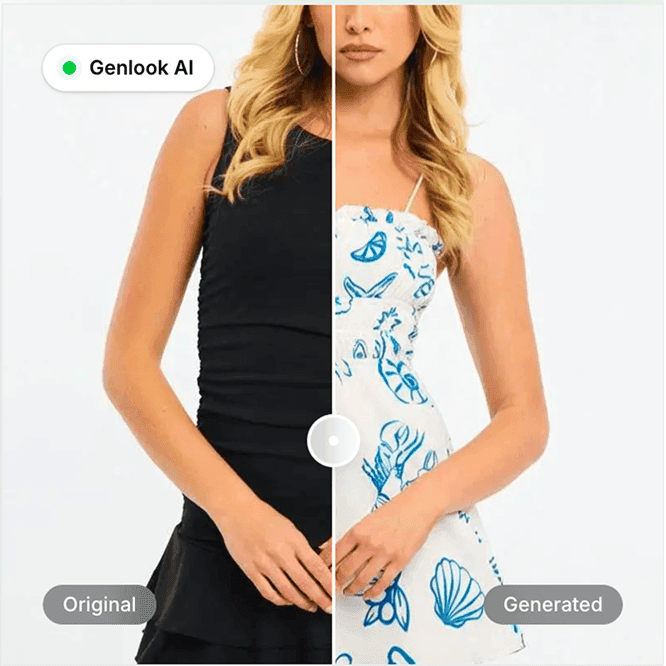
- Why it matters: It bridges the gap between the model and the mirror, drastically reducing "bracketing" (buying two sizes to return one). Shoppers can see exactly how a garment fits their unique body shape. Real-world data shows that shoppers who use high-quality VTO features convert at up to a 35% higher rate compared to those who don't, while brands see return reductions of 15% to 35% .
3. Intelligent Sizing & Fit Prediction
While visual try-on handles the "style" check, data-centric AI handles the "fit" check. Advanced algorithms now cross-reference a shopper's purchase history across thousands of brands to predict their size with near-perfect accuracy.
Combining visual proof (try-on) with data proof (size prediction) is the gold standard for reducing returns. When sizing ambiguity is removed, engaged shoppers spend 10-30% more per order.
4. "Agentic" Shopping Assistants
Chatbots have evolved into AI Shopping Agents. These aren't just support bots; they are personal stylists capable of complex reasoning and multi-turn conversations.
A customer can ask, "I have a summer wedding in Tuscany, find me a floral dress under $300 that matches these sandals," and the agent will scour the inventory to build a complete look. These agents can also handle post-purchase support, managing returns and exchanges autonomously. Shoppers who engage with AI-powered assistance are 25% more likely to convert than those who browse unassisted (Source: Retainful).
This trend now extends beyond your own storefront: ChatGPT can check out Shopify products directly, and Google's Universal Cart is putting one AI-managed cart across Search, Gemini, YouTube, and Gmail.
5. Visual Search & Discovery
Text search is becoming secondary. Visual search allows users to upload a screenshot from Instagram or TikTok and instantly find similar items in your catalog. The AI analyzes patterns, cuts, and colors to match the "vibe," not just the keywords.
In an era where consumers are bombarded with visual inspiration across social platforms, the ability to instantly bridge the gap between "seeing an outfit" and "buying the outfit" is a major competitive advantage.
6. Trend Identification & Merchandising
Dead stock is the enemy of profitability. Platforms are now using proprietary AI vision-language models to visually analyze millions of products and match them to upcoming seasonal trends (like JOOR's Fall 2026 trend reports).
AI-driven predictive analytics factor in micro-trends, weather patterns, and local events to forecast demand with unprecedented precision. This shift from reactive to proactive inventory management means brands can produce closer to actual demand, avoiding costly end-of-season markdowns.
7. Automated Content Generation & Dynamic Backgrounds
Creating high-quality editorial content used to take weeks and cost thousands of dollars. Now, AI is automating product photography at scale. Over 60% of fashion e-commerce brands now use at least one AI tool in content production, up from 35% in 2024, cutting photography costs by up to 90% (Source: OpenPR).
Beyond simple photography, AI is now capable of seamlessly placing products into diverse, lifestyle-oriented settings. Brands can dynamically alter image backgrounds to match a season, a specific ad campaign, or even local weather conditions without needing a new photoshoot. This rapid iteration allows for continuous A/B testing of visual assets, ensuring the highest possible click-through rates across social media and product pages.
8. AI-Powered Shoppable Video & Reels
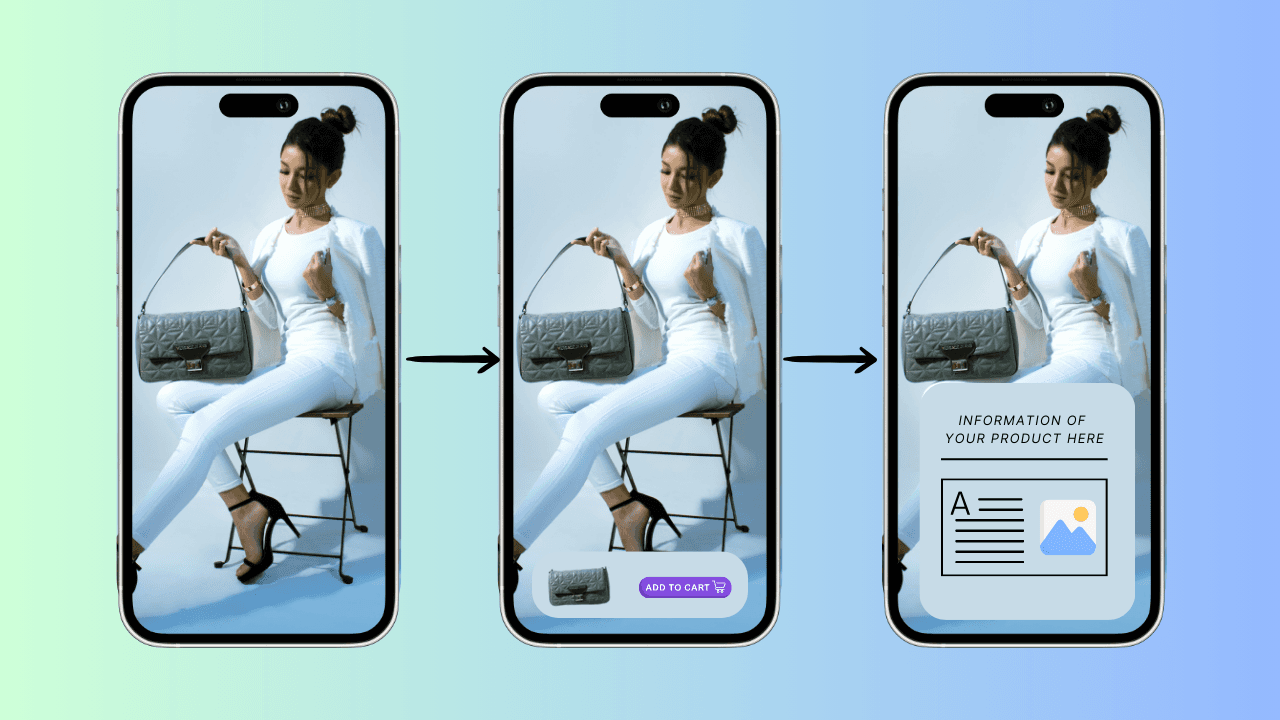
Video commerce is taking over traditional static browsing, heavily influenced by the rise of TikTok and Instagram Reels. In 2026, brands are heavily investing in Shoppable Video, utilizing AI to automatically place, tag, and organize products within UGC (User Generated Content) and brand reels directly on their product pages.
AI can now analyze the content of a video, identify the specific garments being worn, and match them directly to the product catalog: a straight "see it, want it, buy it" pipeline. By matching the right short-form video to the right customer based on browsing history, brands turn inspiration into measurable time-on-site and revenue.
9. Sustainability as a Service
AI is making sustainability measurable. By optimizing supply chains and drastically reducing returns through better sizing and try-on tech, AI directly lowers the carbon footprint of e-commerce.
While running complex AI models does consume energy, the net impact is overwhelmingly positive. The reduction in physical returns (and the heavy logistics, packaging, and shipping they require) represents a massive step forward for an industry traditionally plagued by waste. Brands are now beginning to display "Carbon Saved" metrics at checkout, turning efficiency into a brand virtue.
10. Dynamic Pricing & Yield Management
Borrowed from the airline industry, real-time price optimization uses AI to adjust pricing based on demand, competition, and inventory levels. When done correctly, it ensures maximum profitability during peak demand and efficient liquidation of slow movers.
In 2026, these systems are highly sophisticated, analyzing competitor markdowns, social media virality, and even local weather forecasts to adjust prices on a micro-level. This dynamic approach helps brands maintain healthy margins even in a highly competitive and fast-paced market.
11. Inclusive & Accessible Fashion
AI is democratizing fashion representation. Generative models allow brands to display their clothing on models of every ethnicity, size, and age without hiring a massive cast.
This inclusivity isn't just ethical; it converts. When customers see models that look like them, they form a stronger connection to the product (ASOS built its entire 2026 try-on launch around this). AI is also assisting the design of adaptive clothing for people with disabilities, analyzing ergonomic data to create functional, stylish garments for shoppers the industry has historically ignored.
12. Ethical AI & Zero-Party Data Collection
In 2026, "black box" AI is a liability. Customers are willing to share data for personalization, but only if they receive immediate value in return.
Smart brands use tools like AI Try-On as a value-exchange mechanism: offering shoppers the ability to see themselves in a garment in exchange for their email and morphological preferences. This seamless Zero-Party Data collection builds robust CRMs for highly targeted remarketing, without relying on intrusive third-party cookies. Consumers feel respected, and brands build sustainable, privacy-compliant marketing pipelines.
The Future is Visual
Of all these trends, the shift to Visual Validation remains the most impactful for the bottom line. The ability to see a garment on one's own body changes the psychology of the purchase. It moves the customer from "imagining" to "knowing."
When brands implement these visual technologies effectively, they stop competing purely on price and start competing on experience.
If you want the highest-leverage trend on this list working on your own store, Genlook brings generative AI try-on and its analytics to Shopify, WooCommerce, and other supported platforms.
- Reduce returns: give your customers confidence in their sizing and style choices before checkout.
- Boost conversion: turn passive browsers into buyers with proven conversion lifts.
- Showcase diversity: let anyone, anywhere, see themselves in your brand.
Get started with Genlook and put trend #2 to work this week.
FAQ
Questions, answered.
What is the biggest AI trend in fashion for 2026?↓
Generative AI Virtual Try-On is the dominant trend. It allows customers to visualize products on their own photos without complex 3D modeling, significantly reducing return rates and increasing conversion.
How does AI help with sustainability in fashion?↓
AI reduces the environmental impact of fashion primarily by cutting down return rates. Fewer returns mean less reverse logistics emissions and less inventory waste ending up in landfills.
Is AI replacing human stylists?↓
Not replacing, but augmenting. AI 'Agentic' stylists can analyze vast amounts of data to provide personalized recommendations, allowing human stylists to focus on high-touch VIP interactions.