
PIXELCUT ALTERNATIVE
Genlook vs. Pixelcut
Pixelcut is an image-editing API with a try-on endpoint attached, still labeled beta and tuned for tops. Genlook is a standalone try-on API, production-grade and covering any product type. Here is how they compare on status, pricing and scope.
01 — The short verdict
A side feature, or the whole product.
Pixelcut is a strong general image API where try-on is one endpoint among many. Genlook is a try-on API where try-on is the entire product.
Pixelcut
Built for image editing
- Broad image toolkit: background removal, upscaling, outpainting
- 100 free credits on developer signup
- Try-on is explicitly beta and "may change without notice"
- Clothing only, and "works best with top garments"
- Credits expire: no rollover between billing periods
Genlook
Built for try-on in production
- Production endpoint, stable contract, breaking changes documented
- Any product type: clothing, shoes, glasses, jewelry, wigs
- 9.3s median generation, published, with webhooks
- Credits never expire, $0.08 down to $0.065 at volume
02 — Feature by feature
Where each API stands.
Checked against both platforms' public docs and pricing pages.
Try-on status
Production, versioned changelog
Beta, may change without notice
Price per try-on
$0.08, $0.065 at 3,000+ credits
$0.10, plus $0.05 when garment extraction runs
Credit expiry
Never expire
No rollover between billing periods
Product types
Any product type, one endpoint
Clothing, works best on tops
Speed
9.3s median, published
Not published
Free start
5 free credits
100 free credits
Scope
Virtual try-on, end to end
Background removal, upscale, outpaint, try-on
End-user data
User records, deletion API, image auto-expiry
Result URLs expire after one hour
The part you can't compare on paper.
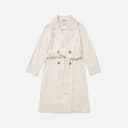
Four generations from the Genlook engine on real product photos.











03 — The real difference
What beta means in production
Pixelcut is a good image API. Background removal at five cents, upscaling, outpainting, clean docs with an OpenAPI spec, and 100 free credits to start: if your product needs general image processing, it earns a place in the stack, and its try-on price has come down sharply to $0.10 per image.
The try-on endpoint itself still carries the beta label, and its own docs are candid about the boundaries: it "may change without notice", it "works best with top garments", fine details "may not be reproduced perfectly". Add the operational shape, credits that expire each billing period, result URLs that die after an hour, no published latency, and you have an endpoint built for experimentation rather than a product's critical path.
How Genlook handles it
Genlook's try-on is the product, not a beta wing of one. The contract is stable with a documented changelog, latency is published at 9.3 seconds median, and one endpoint covers any product type, dresses, denim and outerwear as well as tops, plus shoes, glasses, jewelry and wigs. Credits never expire, results are stored rather than evaporating after an hour, and end-user data has a lifecycle: user records, auto-expiring images, and a deletion endpoint for privacy requests. The same API serves storefronts, consumer apps, kiosks and AI assistants alike.
If you need one API for varied image work, Pixelcut is a fine choice with try-on as a bonus. If try-on is the feature your users will touch every day, it deserves an API that treats it as the whole job.
04 — In practice
What the Genlook API is tuned for.
Production contract
A stable endpoint with a documented changelog and breaking-change policy. No beta disclaimer over your critical path.
Predictable speed
9.3s median per generation, async with webhooks or polling.
Any product type
Clothing, shoes, glasses, jewelry, hats, wigs: one endpoint covers them all. Not tuned for tops alone.
Data lifecycle handled
End-user records, per-product try-on stats, a deletion endpoint for privacy requests, auto-expiring images.
05 — Getting started
Two calls to your first try-on.
Create a key
Self-serve at platform.genlook.app. New accounts start with 5 free credits.
Upload and generate
POST the person photo, POST the try-on. Poll for the result or receive a webhook.
Go live
Credits from $0.08, $0.065 at volume. Building something new? The startup program adds free credits.
06 — FAQ
Questions, answered.
Isn't Pixelcut's try-on cheaper than it used to be?↓
Yes, notably: it now lists at $0.10 per image, down from earlier pricing around $0.50. Genlook is $0.08, or $0.065 above 3,000 credits, and Pixelcut adds $0.05 when its garment extraction step runs. The bigger differences are elsewhere: beta status, tops-focused quality and expiring credits.
What does the beta label actually mean?↓
Pixelcut's own docs say the endpoint "may change without notice". For a weekend prototype that is fine. For a feature your users depend on, a contract that can shift under you is a real operational risk, which is why Genlook versions its API and documents breaking changes.
Pixelcut gives 100 free credits and Genlook only 5. Why?↓
Pixelcut's credits spread across its whole toolkit, and expire with the billing period. Genlook's 5 free try-ons are enough to run the quickstart on your own product photos, and the credits you then buy never expire.
Can Genlook also remove backgrounds or upscale images?↓
No. Genlook does virtual try-on only. If you need general image processing alongside try-on, pairing a dedicated tool for that with a production try-on API is a reasonable stack.
Can I compare output quality directly?↓
Yes. Both platforms have free credits; run the same product photos through each. Genlook's gallery above shows unretouched generations, including full-length garments where tops-tuned models struggle.
Build try-on into your product.
Self-serve keys, five free credits, and two API calls to your first generation.