
 Shopify
 WooCommerce
FAL AI ALTERNATIVE
Genlook vs. Fal AI
fal.ai is a serious inference platform that hosts several try-on models, FASHN and Kling among them. Genlook is the finished try-on API those parts would add up to. Here is where the assembly work actually sits.
01 — The short verdict
An inference layer, or a finished API.
fal gives you well-run infrastructure and a gallery of models. Genlook gives you the try-on product those pieces would become after weeks of assembly.
Fal AI
Built for inference
- Hosts multiple try-on models: FASHN, Kling, IDM-VTON, FLUX 2
- Solid infrastructure: durable queue, webhooks, auto-retries
- Results live on temporary URLs; persisting outputs is your job
- Licensing varies by model; IDM-VTON's commercial status is unclear
- No try-on pipeline: model choice, params and prompts are yours
Genlook
Built for try-on
- Standalone try-on API, commercially licensed end to end
- 9.3s median generation, webhooks or polling
- Any product type, results stored, user records with deletion API
- No prompts, no model shopping: two calls and it runs
02 — Feature by feature
Where each platform stands.
Checked against fal's pricing, docs and model pages.
What you get
A try-on API: engine, storage, user data
Inference hosting for try-on models
Cost per try-on
$0.04, from $0.015 on plans
$0.07-0.075 per call on FASHN and Kling
Speed
9.3s median
~15s for FASHN on fal, per its launch post
Result storage
Stored, with user records and deletion API
Temporary URLs; you persist outputs yourself
Licensing
Commercial service
Model by model: FASHN and Kling cleared, IDM-VTON unclear
Inputs
Product photo and person photo, no prompts
Params per model; FLUX 2 and IDM-VTON need text prompts
Product types
Any product type, one endpoint
Depends on the model you pick
Model choice
One try-on engine
Large gallery across image, video and audio
The part you can't compare on paper.
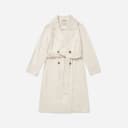
Four generations from the Genlook engine on real product photos.











03 — The real difference
Where the assembly work sits
Credit where due: fal runs good infrastructure. The queue is durable, webhooks and auto-retries come standard, and the try-on shelf is real, FASHN's v1.6 at $0.075 a call, Kling's at $0.07, both cleared for commercial use. If you are building a media product and want to compose models yourself, fal is one of the better places to do it.
Composition is exactly the work, though. You pick the model and own its migration path when a better one lands. You manage its parameters, and some options, FLUX 2's try-on, IDM-VTON, want text prompts for what should be an image-to-image job. Licensing is model by model, with IDM-VTON's commercial status unclear. And fal's output URLs are temporary: the storage, the user records, the privacy handling, the retry-on-bad-output logic, all of that is product code you write and maintain.
How Genlook handles it
Genlook is what that assembly produces, sold as one standalone API. Product photo in, person photo in, result out in 9.3 seconds median, no prompts, no model shopping, and any product type through the same endpoint. Results are stored rather than expiring, end users become records you can delete on request, per-product stats show what performs, and when the engine improves it does so behind the same contract. A try-on costs $0.04 pay as you go and from $0.015 on a plan, below fal's hosted models before you count the code they still require. The same API serves storefronts, consumer apps, kiosks and AI assistants alike.
If try-on is one experiment among many in a media product, fal is a fine workbench. If try-on is the feature, skip the assembly.
04 — In practice
What the Genlook API is tuned for.
No assembly
Two REST calls, no prompts, no model gallery to evaluate. The engine choice is our job, permanently.
Results that persist
Outputs are stored with the user's record, not handed back as a URL with an expiry timer.
Any product type
Clothing, shoes, glasses, jewelry, hats, wigs: one endpoint covers them all, with no category parameter to get wrong.
Data lifecycle handled
User records, per-product try-on stats, a deletion endpoint for privacy requests, auto-expiring images.
05 — Getting started
Two calls to your first try-on.
Create a key
Self-serve at platform.genlook.app. New accounts start with 10 free credits.
Upload and generate
POST the person photo, POST the try-on. Poll for the result or receive a webhook.
Go live
Pay as you go at $0.04, or from $0.015 on a plan. Building something new? The startup program adds free credits.
06 — FAQ
Questions, answered.
fal hosts FASHN at $0.075. Is that the same thing?↓
It is a comparable model at a higher price: $0.075 there, against Genlook's $0.04 pay as you go and $0.015 to $0.02 on a plan. It is also not the same product: on fal you still own output storage, user data, privacy handling, retries on bad generations and the migration path between models.
Which try-on models does fal actually host?↓
As of this writing: FASHN v1.5 and v1.6, Kling's Kolors try-on, IDM-VTON, CatVTON and a FLUX 2 try-on workflow. FASHN and Kling are marked for commercial use; IDM-VTON and CatVTON carry no such clearance on their fal pages, so check licensing before shipping them.
Is fal faster than Genlook?↓
Not on the published numbers for try-on. fal markets fast inference across the platform, but the concrete try-on figure is about 15 seconds for FASHN on fal, against Genlook's 9.3 seconds median.
When is fal the right choice?↓
When try-on is one of several media features you are composing, or you specifically want to experiment across models with shared infrastructure. fal's queue, webhooks and retries are genuinely well built; the trade is that everything above the inference call is yours.
Can I test Genlook before committing?↓
Yes. Keys are self-serve, new accounts start with 10 free credits, and the quickstart is two REST calls. Run the same product photos through fal's hosted models and compare.
Build try-on into your product.
Self-serve keys, ten free credits, and two API calls to your first generation.