
 Shopify
 WooCommerce
FASHN ALTERNATIVE
Genlook vs. FASHN
FASHN is a fashion image suite: try-on plus model swaps, editing and video, priced in credit tiers. Genlook is a standalone try-on API: one price per try-on, predictable speed, any product type, for whatever you are building. Here is the detail.
01 — The short verdict
A studio suite, or a try-on engine.
Both are commercial, self-serve APIs with real models behind them. FASHN spreads across fashion imagery; Genlook goes all-in on try-on itself.
FASHN
Built for fashion imagery
- Nine endpoints: try-on, model create and swap, editing, video
- Up to 4K output on Try-On Max, open v1.5 weights
- Credit matrix: cost varies by mode and resolution, 1 to 5 credits per image
- Latency spreads from 5s to 120s depending on model and mode
- No free API credits; minimum $7.50 purchase
Genlook
Built for try-on, any usage
- One price per try-on: $0.04, from $0.015 on plans
- 9.3s median generation, webhooks or polling
- Any product type through one endpoint: clothing, shoes, glasses, jewelry, wigs
- 10 free credits on signup, self-serve keys
02 — Feature by feature
Where each API stands.
Checked against both platforms' public docs and pricing pages.
Try-on price
$0.04, from $0.015 on plans
$0.075 base; 1 to 5 credits by mode and resolution on Try-On Max
Speed
9.3s median, consistent
5-17s on v1.6, 20-120s on Try-On Max
Free start
10 free credits, self-serve
No free API credits, $7.50 minimum
Scope
Virtual try-on, end to end
Try-on plus model swap, editing, video
Product types
Any product type, one endpoint
Garments; shoes, hats, jewelry via Try-On Max
End-user data
User records, deletion API, image auto-expiry
Generation-only, inputs deleted after 72h
Product analytics
Per-product try-on stats endpoint
Not offered
Integration
Two-call REST flow, SDK, MCP connector
REST plus TypeScript and Python SDKs
The part you can't compare on paper.
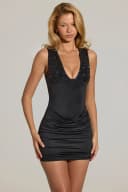
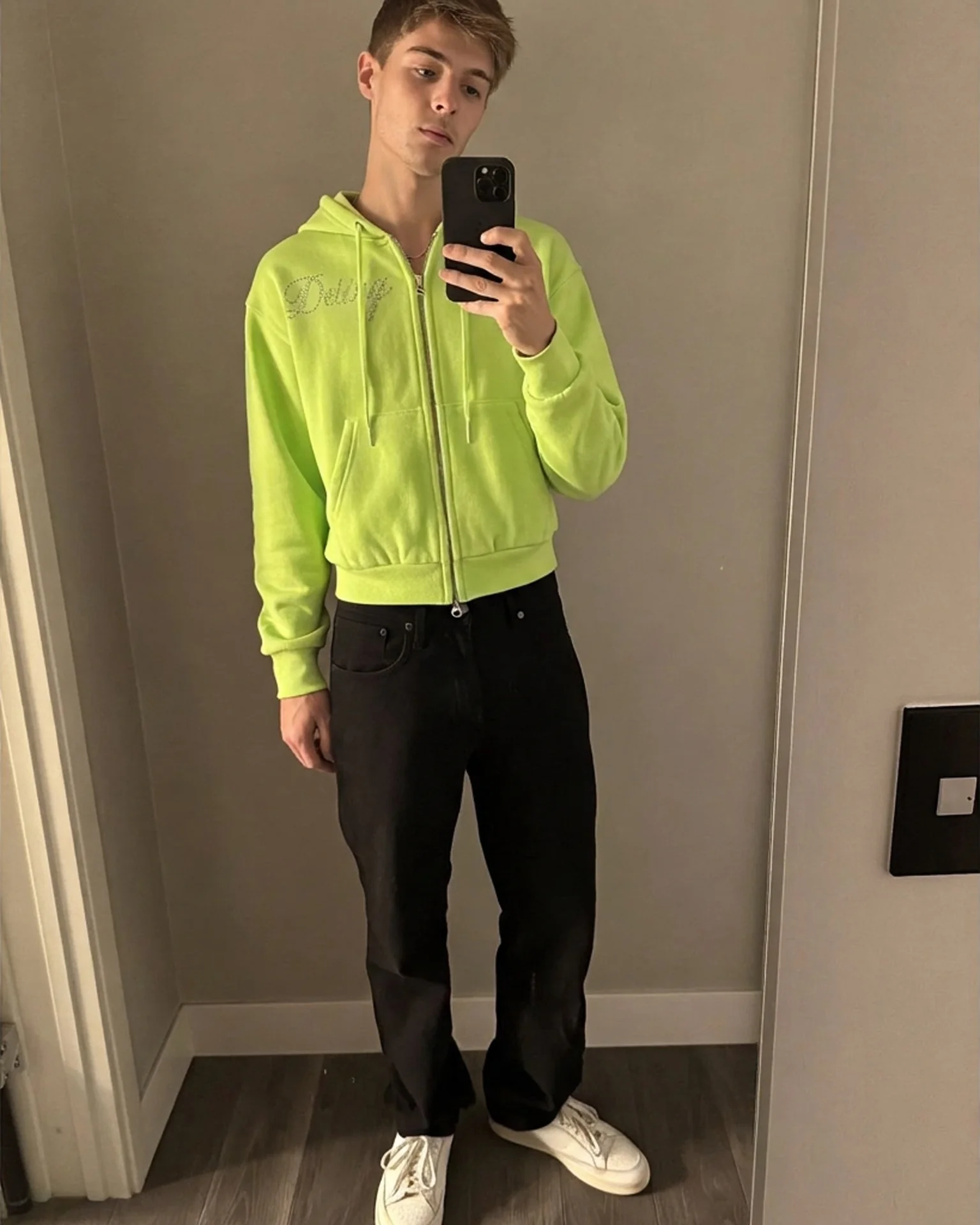
Four generations from the Genlook engine on real product photos.









03 — The real difference
What each API is optimized to power
FASHN has earned its place in the fashion AI stack. It trains its own models, publishes v1.5's weights openly, mirrors its endpoints on fal.ai, and several AI products, including some try-on apps, run on it. If you are building a creative tool that generates fashion imagery, on-model photos, edits, videos, its nine-endpoint suite is the more complete kit, and Try-On Max pushes output up to 4K.
The cost of that flexibility is that every knob is yours to manage. Pricing is a matrix: 1 to 5 credits per image depending on mode and resolution, with latency stretching from 5 seconds on fast settings to two minutes on quality 4K. There are no free API credits, and inputs vanish after 72 hours because the product's job ends at the image.
How Genlook handles it
Genlook is a standalone try-on API, and try-on is the entire job. Every generation costs the same $0.04 (from $0.015 on a monthly plan), lands in 9.3 seconds median, and handles any product type through one endpoint, clothing, shoes, glasses, jewelry, wigs, with no mode or resolution decisions. Around it sits what production integrations need regardless of what you are building: end-user records with a deletion endpoint for privacy requests, auto-expiring images, per-product try-on stats, webhooks, and an MCP connector so try-on works from AI assistants too. You start with 10 free credits and two REST calls.
If you are building a fashion content studio, FASHN's suite fits. If you need try-on itself, in a storefront, a consumer app, a kiosk or an agent, that is the whole of what Genlook does.
04 — In practice
What the Genlook API is tuned for.
One price, no matrix
$0.04 per try-on, from $0.015 on a plan. No mode or resolution tiers, and pack credits never expire.
Predictable speed
9.3s median per generation, async with webhooks or polling. No quality knob that trades speed for output.
Any product type
Clothing, shoes, glasses, jewelry, hats, wigs: one endpoint covers them all, with no category parameter to get wrong.
Data lifecycle handled
End-user records, per-product try-on stats, a deletion endpoint for privacy requests, auto-expiring images.
05 — Getting started
Two calls to your first try-on.
Create a key
Self-serve at platform.genlook.app. New accounts start with 10 free credits.
Upload and generate
POST the person photo, POST the try-on. Poll for the result or receive a webhook.
Go live
Pay as you go at $0.04, or from $0.015 on a plan. Building something new? The startup program adds free credits.
06 — FAQ
Questions, answered.
How does pricing actually compare?↓
Genlook is cheaper at every volume: FASHN's standard try-on is $0.075, Genlook's is $0.04 pay as you go and $0.015 to $0.02 on a plan. The other difference is shape. FASHN's newer Try-On Max bills 1 to 5 credits per image depending on mode and resolution, so cost per image varies; Genlook charges the same for every generation, and pack credits never expire.
Does Genlook offer model swaps, editing or video like FASHN?↓
No. FASHN is a fashion image suite and those endpoints are genuinely useful for content pipelines. Genlook does one thing, virtual try-on, and builds everything around doing it well: any product type, stable latency, user records and privacy tooling.
Can both APIs be used commercially?↓
Yes. FASHN states its API outputs are commercially usable, and Genlook is a commercial service end to end. This is worth checking whenever you evaluate try-on APIs; several popular open-source try-on models are licensed for research only.
Can I test Genlook without paying?↓
Yes. Self-serve accounts start with 10 free credits, enough to run the two-call quickstart on your own product photos. No sales call, no minimum purchase.
Which produces better results?↓
Run both on your own catalog; it is the only comparison that matters. Genlook's gallery above shows unretouched generations from real product photos, and the free credits cover a head-to-head test.
Build try-on into your product.
Self-serve keys, ten free credits, and two API calls to your first generation.