
 Shopify
 WooCommerce
The Hardest Category in Fashion to Sell Online
Selling swimwear online means fighting two battles at once.
The first is fit anxiety at its absolute peak. No garment is less forgiving than a swimsuit: sizing varies wildly between brands, stretch fabrics behave differently on every body, and shoppers are asked to imagine how the most revealing item in their wardrobe will look on them, from a flat product photo of a sample-size model.
The second battle is unique to this category: much of swimwear is final sale. For hygiene reasons, many stores restrict or refuse swimwear returns. That policy protects margins, but it transforms the psychology of the purchase. When a shopper can't undo a mistake, hesitation wins, carts get abandoned, and a wrong purchase doesn't come back as an exchange: it comes back as a one-star review and a lost customer.
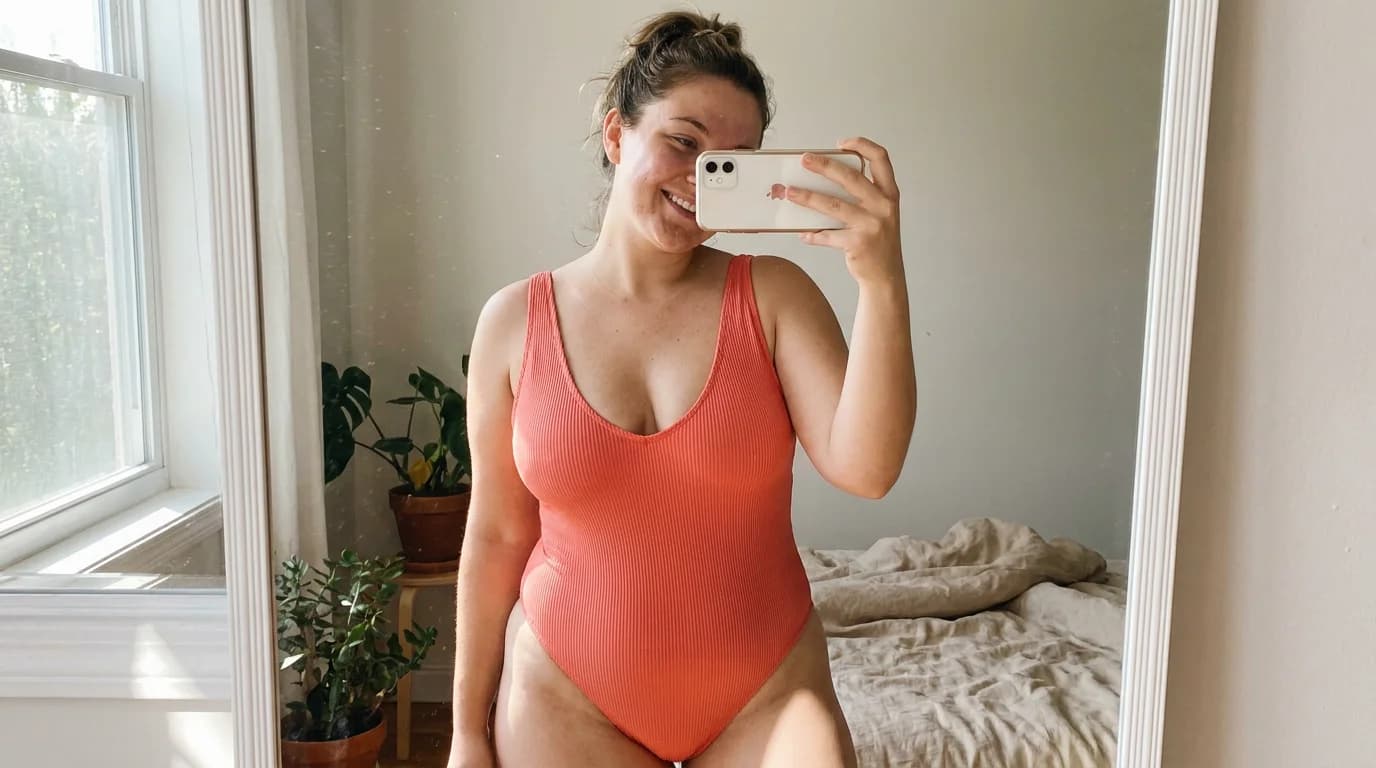
Virtual try-on (VTO) attacks both problems at the source: it lets the shopper see the swimsuit on their own body before the money leaves their account. In this guide, we will cover why swimwear is uniquely suited to generative AI try-on, what the technology can and cannot do, and how to add it to your store.
Why Swimwear Shoppers Hesitate (and Photos Don't Help)
Standard product photography systematically fails swimwear:
- Sample-size bias. The suit is shot on one body type. A shopper with a different bust, torso length, or hip shape is extrapolating, and extrapolation kills confidence in a category this fitted.
- Cut is everything. High-leg vs classic, plunge vs square neck, cheeky vs full coverage: these distinctions decide the purchase, and they read completely differently on different bodies.
- Color vs skin tone. Swim colors interact with skin tone more visibly than any other apparel category. A shade that pops in the studio can wash out, or transform, on the actual shopper.
- Body confidence. Swimwear is emotionally loaded. Shoppers don't just ask "will it fit?" but "will I feel good in it?": a question only an image of themselves can answer.
This is why swimwear brands that solve visualization see outsized effects: the categories where shoppers hesitate the most are the categories where visual confidence moves the needle the most. It's the same logic that drives returns reduction across fashion e-commerce, concentrated on the most fit-sensitive product there is.
AI vs. AR: Why Generative AI Wins for Swimwear
As with wigs and apparel generally, there are two technology families to choose from, and for swimwear the gap is even wider.
AR overlays can't do stretch fabric
Augmented-reality try-on projects a 3D garment model onto a live camera feed. For a rigid product like sunglasses, that works. For a swimsuit, it fails on the two things that matter: fabric behavior (stretch, compression, ruching) and fit against a real body. An AR swimsuit floats over the shopper like a costume: precisely the uncanny effect that destroys confidence instead of building it.
Generative AI redraws the suit on a real photo
Generative try-on takes one photo of the shopper and uses diffusion models to realistically render the actual product onto it, respecting body shape, lighting, and how the cut sits on their proportions. The output is a photorealistic image that answers the real question: "this suit, on me."
A practical bonus for swimwear merchants: generative VTO works from your existing product photography. No 3D scanning of every SKU, no reshoots, which matters in a category with large seasonal drops and fast-moving colorways.
Adding Swimwear Try-On to Your Store
Genlook supports swimwear as a dedicated try-on category, and works on Shopify, WooCommerce, and other supported platforms:
- Create your account and connect your store: the setup takes minutes, not a development sprint.
- Enable your swimwear products. Genlook works from your existing product images; enable the products you want and the try-on button appears on their product pages.
- Shoppers try on with one photo. A simple mirror selfie is enough. The AI renders the swimsuit on their photo in seconds, in the browser, with no app download.
- Measure the impact. Track try-ons, engagement, and conversion from your dashboard, and watch what happens to your final-sale hesitation problem.
Best practices for swimwear specifically
- Put try-on above the fold on product pages, since swimwear shoppers hesitate early.
- Enable it on your bestsellers first and compare conversion against untouched products for a clean read.
- Pair it with your size guide, don't replace it. VTO answers "how does it look on me?"; a good size chart still answers "which size do I order?" Together they cover the two halves of fit confidence.
- Lean into final-sale messaging. "Try it on before you buy: final sale" turns your returns policy from a threat into a reason to use the feature.
The Bottom Line
Swimwear is the category where online shoppers need the most confidence and get the least help. Final-sale policies raise the stakes further: every purchase is a commitment, and every hesitation is a lost sale.
Virtual try-on closes that gap with the only evidence that actually convinces a swimwear shopper: an image of themselves wearing the suit.
Get started with Genlook and give your swimwear shoppers the confidence to hit "buy," on Shopify, WooCommerce, and every platform we support.
FAQ
Questions, answered.
Does virtual try-on work for swimwear and bikinis?↓
Yes. Generative AI try-on renders one-pieces, bikinis, and cover-ups onto a photo the shopper uploads, respecting their body shape and the suit's cut and color. It works from standard product photography, with no 3D models required.
Why is virtual try-on especially valuable for swimwear stores?↓
Swimwear combines the highest fit sensitivity in fashion with frequent final-sale (no-return) policies. Shoppers hesitate because a mistake can't be undone. Letting them see the suit on their own body before buying removes the main cause of abandoned carts and bad purchases.
Do shoppers need to upload photos in swimwear?↓
No. Shoppers upload a normal clothed photo; a simple mirror selfie works. The AI renders the swimsuit onto that photo, so nobody has to photograph themselves in underwear or swimwear to use the feature.
Which platforms does Genlook's swimwear try-on support?↓
Genlook works on Shopify, WooCommerce, and other supported platforms. Setup starts at genlook.app/get-started and uses your existing product images.