 Shopify
 WooCommerce
 API
Flat Lay
A product photography style where the garment is laid flat and shot from directly above.
What is a flat lay?
A flat lay is a product photo taken from directly above, with the garment laid flat on a surface. It is the fastest and cheapest of the three standard apparel photography formats, requiring no model and no mannequin: just the garment, a clean background, and an overhead camera.
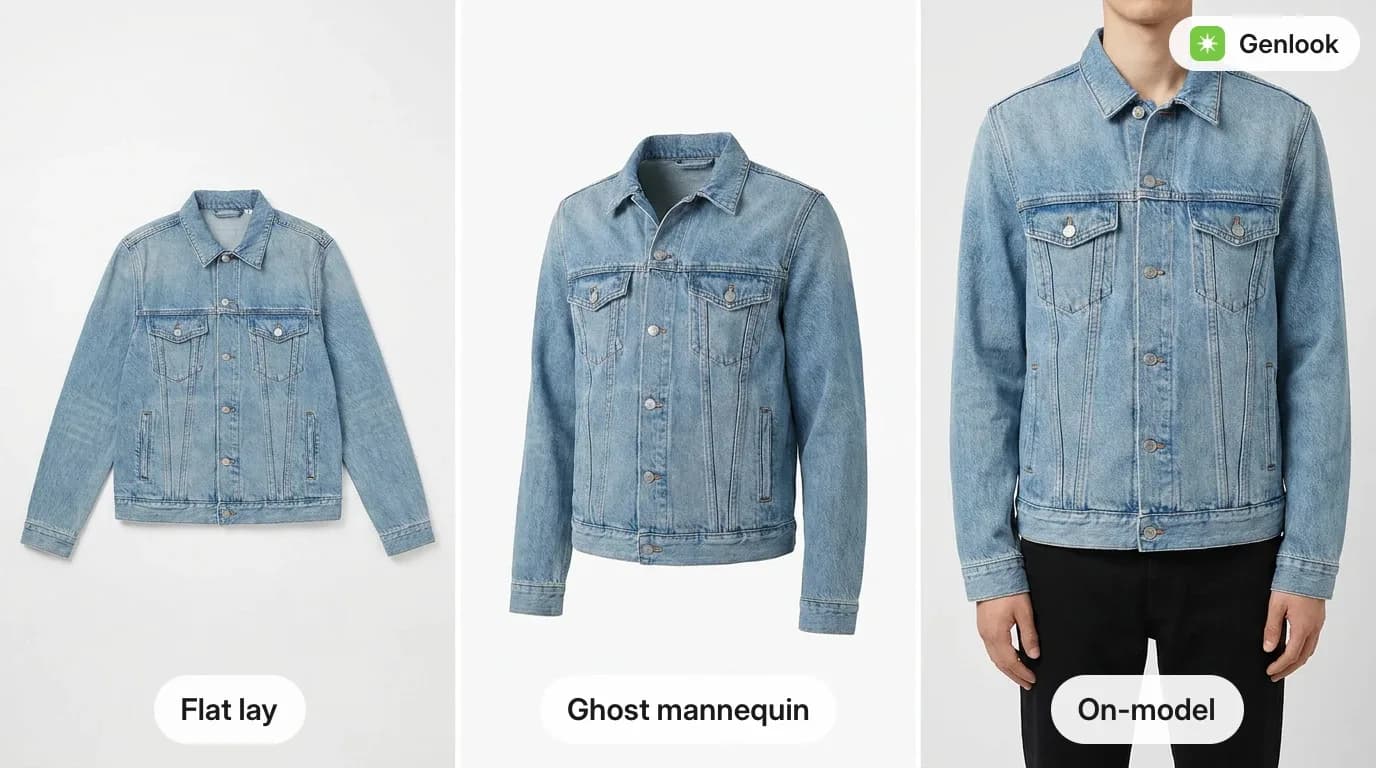
The three standard formats
| Format | Shows | Cost | Limitation |
|---|---|---|---|
| Flat lay | Shape, color, print, styling combinations | Lowest | No volume, no sense of fit |
| Ghost mannequin | 3D worn shape without a model | Medium | No human context |
| On-model | Real fit, drape, and scale | Highest | Tied to one model's look and size |
Many stores mix formats: flat lays for catalog grids and styling shots, ghost mannequin or on-model for the product page hero.
Flat lays as try-on input
Flat lays are a usable input for garment transfer: the garment's outline, color, and print are clearly visible and unobstructed. Generative virtual try-on systems infer the worn shape and synthesize the drape, so even a photo without volume can produce a realistic on-body render. Clean, front-facing, well-lit flat lays on a neutral background give the best results.
How to shoot a flat lay
- Camera directly overhead, lens parallel to the surface, so the garment is not distorted at the edges.
- Neutral, even background: white, light grey or a plain surface that contrasts with the garment's color.
- Soft, diffused light from one or two sides to avoid hard shadows and hot spots on shiny fabrics.
- Garment fully smoothed, sleeves arranged symmetrically, labels and tags hidden.
- Consistent framing across the catalog, so products line up in collection grids.
Styled flat lays add accessories, shoes or props around the main piece to suggest an outfit. They work well on social media and in editorial blocks; for the product page, a clean single-item shot is easier to read.
Flat lay vs. on-model: what shoppers miss
A flat lay shows exactly what the garment is, but not what it looks like worn. Length, how the fabric falls, and how a cut suits a body are invisible when the piece lies flat. That gap is why stores add on-model photography, and why virtual try-on is useful on stores that only have flat lays: it turns the overhead shot into a view of the garment on the shopper's own photo, without a photoshoot.
FAQ
Questions, answered.
Are flat lays good enough for virtual try-on?↓
Generally yes, for tops, dresses, and knitwear with a clear front-facing layout. Ghost mannequin or on-model photos can help for structured garments (blazers, coats) where the worn silhouette carries important information.
What does flat lay mean?↓
Flat lay means photographing an item laid flat on a surface from directly above. In fashion e-commerce it is the simplest product photo format: no model, no mannequin, just the garment and an overhead camera.
Is flat lay or ghost mannequin better for e-commerce?↓
It depends on the product. Flat lays are cheaper and faster and suit t-shirts, knitwear and accessories. Ghost mannequin shots show the worn 3D shape and suit structured pieces like jackets and tailoring. Many stores use flat lays for the grid and a ghost mannequin or on-model photo on the product page.