
 Shopify
 WooCommerce
 API
APISize Chart
A table mapping garment measurements to label sizes, helping shoppers pick the right size before buying.
What is a size chart?
A size chart is a table that maps label sizes (S, M, L, or numeric sizes) to physical measurements: chest, waist, hips, inseam, sleeve length. It is the oldest fit tool in e-commerce, and still the baseline shoppers expect on every product page.
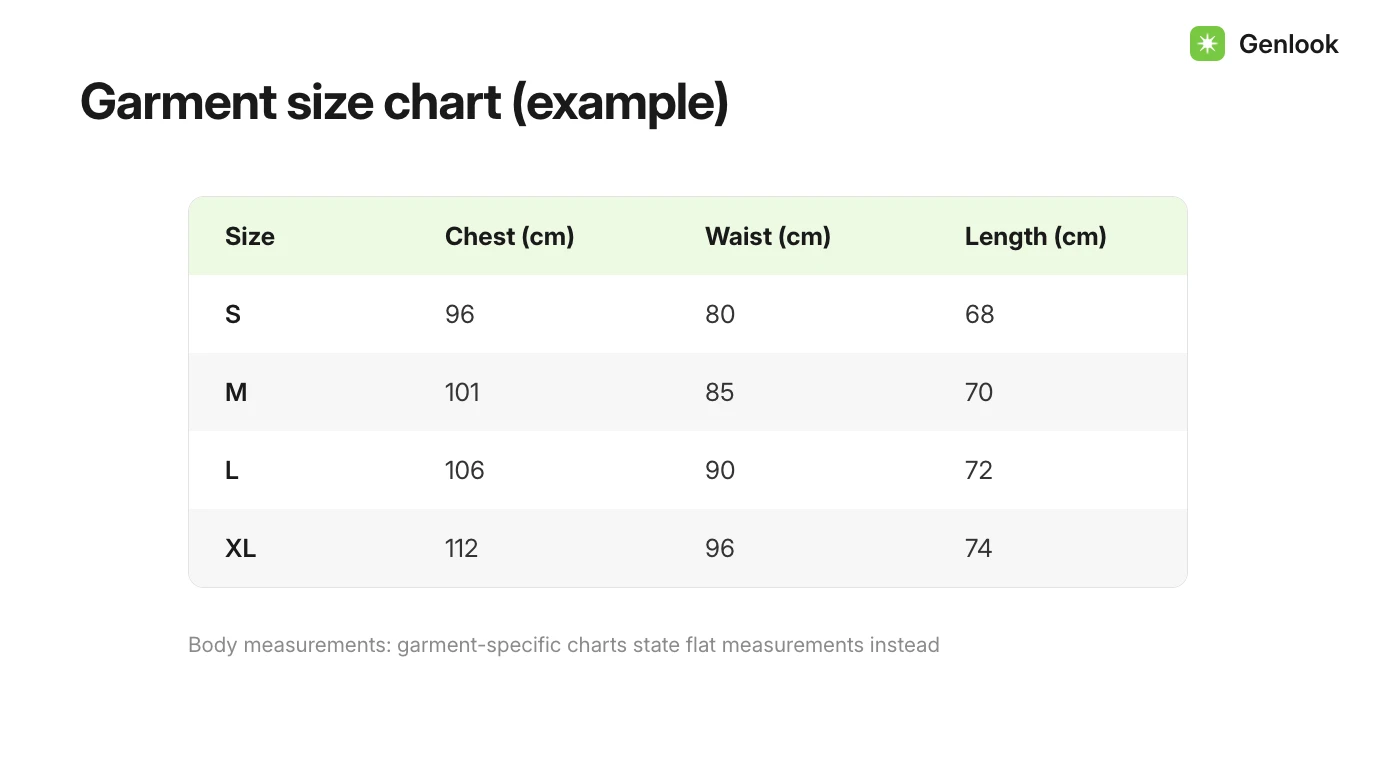
Generic vs. garment-specific charts
- Generic brand charts apply one measurement table to the whole catalog. Fast to set up, but inaccurate the moment cuts differ between garments.
- Garment-specific charts give the actual measurements of each product, often distinguishing body measurements ("fits chest 96-101 cm") from garment measurements ("chest width 54 cm laid flat").
- Data-driven charts adjust recommendations using purchase and return history ("80% of buyers of this item took their usual size").
Why size charts alone don't stop returns
Sizing is not standardized across brands, and two garments with identical measurements can fit differently depending on fabric stretch, cut, and intended ease. That gap is why shoppers resort to bracketing even when a chart is present, and why fit-related issues remain the leading driver of the fashion return rate.
Size charts answer the numeric half of the fit question. The visual half ("how does it actually look on me") is what virtual try-on and measurement-based tools built on 3D body models address. The two are complementary, not competing.
FAQ
Questions, answered.
What measurements should a clothing size chart include?↓
At minimum: chest/bust, waist, and hips for tops and dresses; waist and inseam for bottoms. Garment-specific charts should state whether numbers are body measurements or flat garment measurements, and in which unit.