 Shopify
 WooCommerce
 API
APIAR Try-On
A real-time experience that overlays 3D product models onto a live camera view of the shopper.
What is AR try-on?
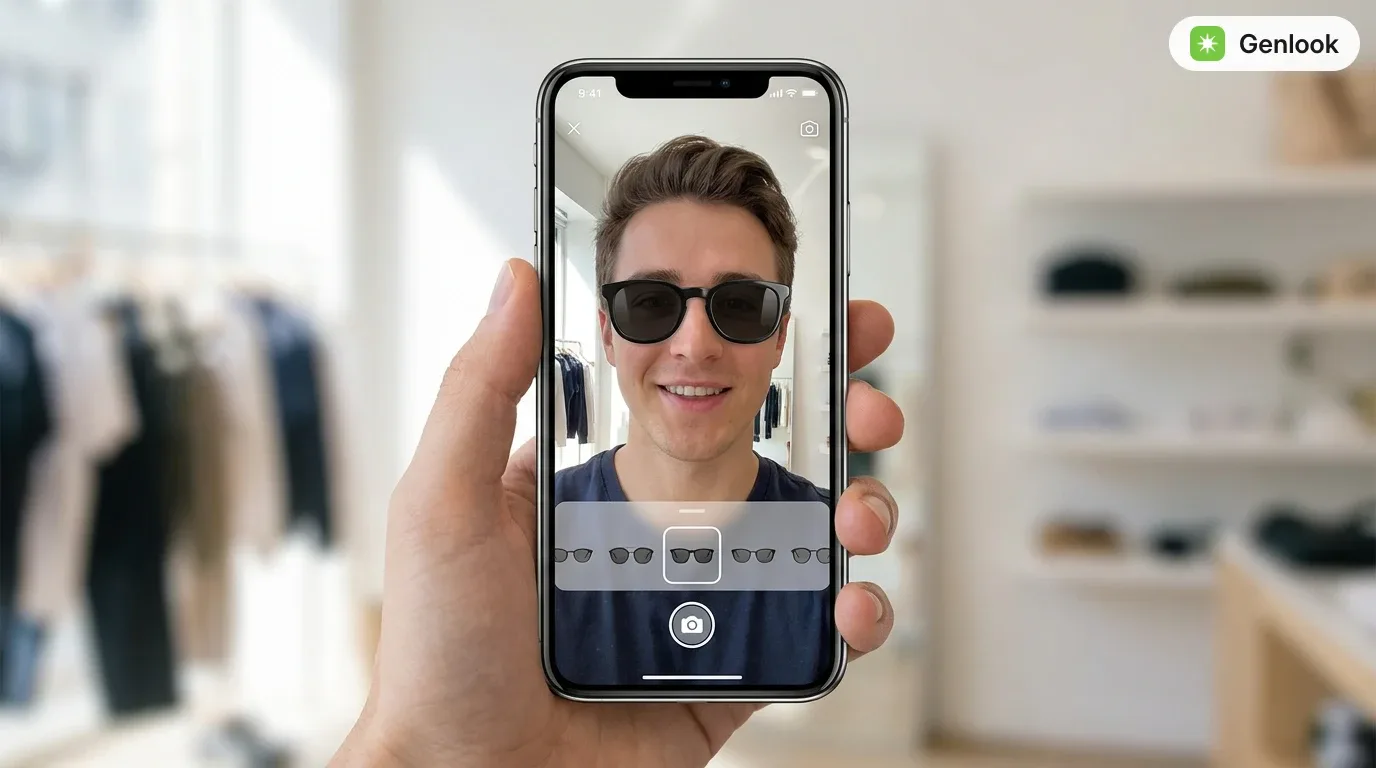
AR try-on (augmented reality try-on) uses a device's camera to superimpose a 3D product model onto the shopper in real time. The product tracks the user's movements: turning the head shows glasses from a new angle; moving a foot rotates a sneaker.
It is the most established form of virtual try-on for rigid products whose shape does not deform with the body: eyewear, watches, rings, makeup, and footwear.
How it works
- Tracking: the camera feed is analyzed frame by frame with face tracking or pose estimation to detect anchor landmarks (eyes, wrist, feet).
- 3D model loading: a pre-built 3D asset of the product (e.g. a
.glbfile) is fetched. - Rendering: the model is anchored to the landmarks and composited into the live video, with lighting and occlusion handling for realism.
- Interaction: the shopper switches colors or models without leaving the camera view.
AR try-on can run in a native app or directly in the browser (often called WebAR), which removes the app-download step.
AR try-on vs. generative AI try-on
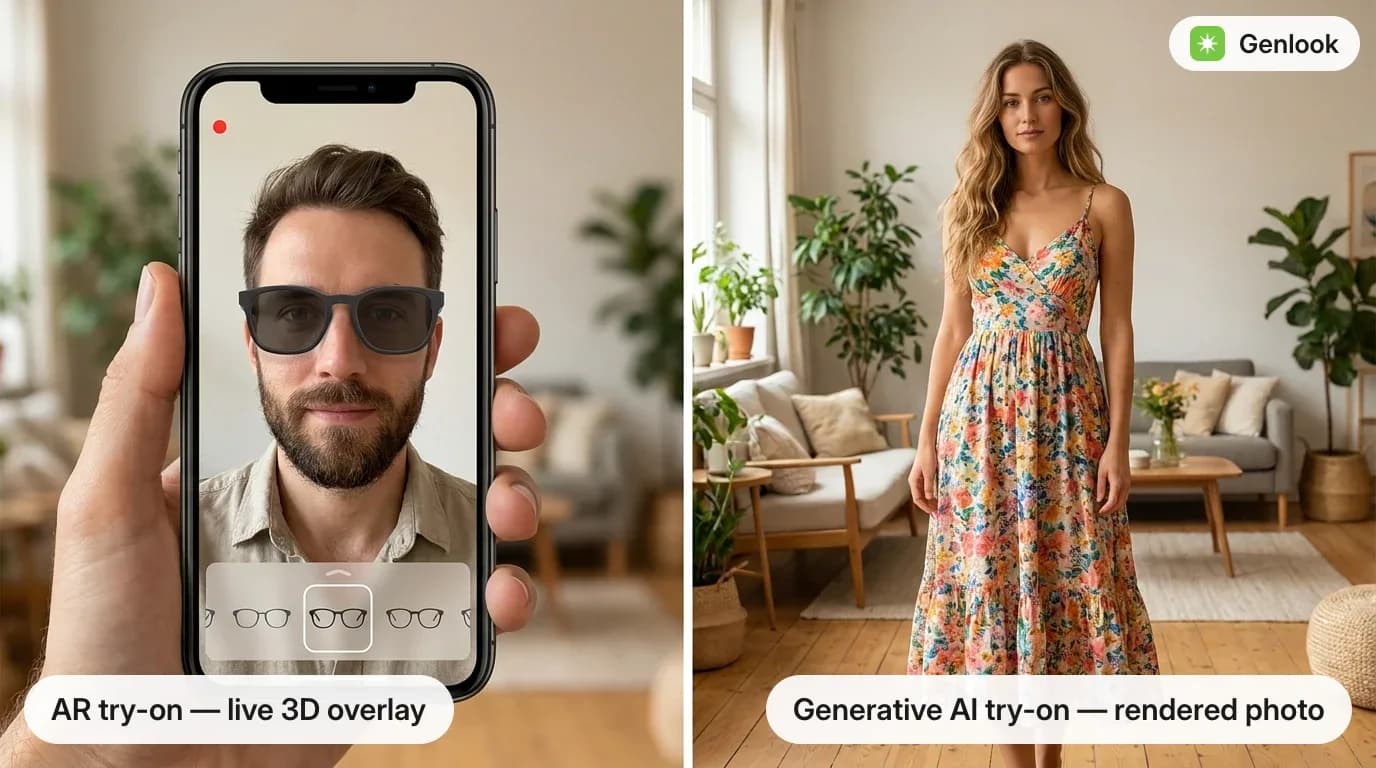
| AR try-on | Generative AI try-on | |
|---|---|---|
| Output | Live, interactive video overlay | Static generated image |
| Typical products | Rigid items: glasses, watches, shoes | Apparel: tops, dresses, knitwear |
| Per-product setup | 3D asset per SKU | None (uses existing product photos) |
| Fabric realism | Limited | High (drape, wrinkles, lighting) |
The two approaches are complementary: AR suits fixed-shape products where live interaction matters; garment transfer suits clothing, where fabric must be re-rendered per body and pose.
FAQ
Questions, answered.
Why is apparel hard for AR try-on?↓
Fabric deforms with every body shape and movement. A rigid 3D garment overlay can't reproduce realistic drape in real time, which is why apparel try-on generally uses generative AI on a photo instead.